

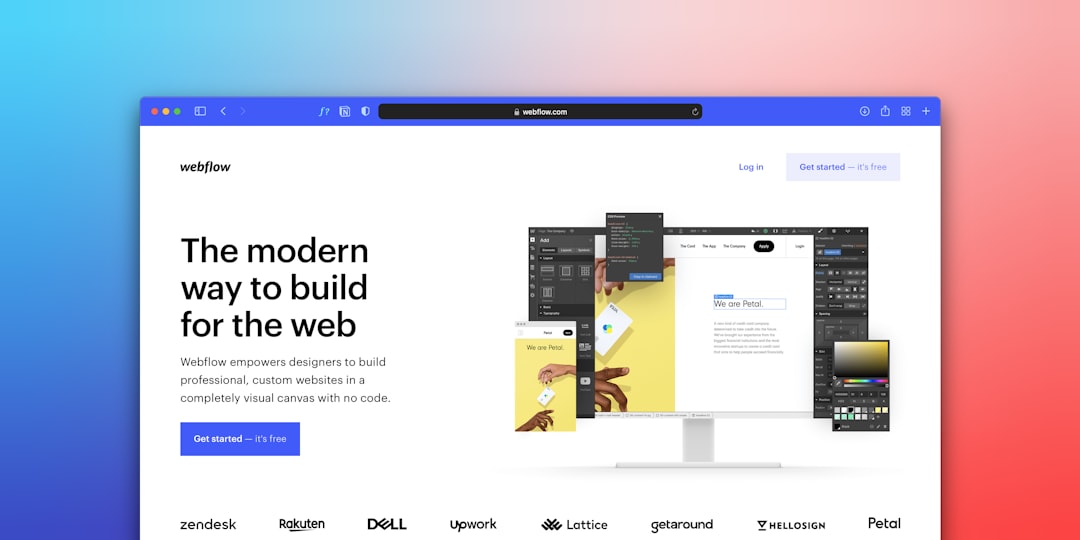
Here is something most marketers will tell you: targeting is everything. HubSpot’s landing page research shows that companies with 30+ landing pages generate 7x more leads than those with fewer than 10 — specificity scales.
Be specific. Be clear about who you are speaking to. Use the tools available — Facebook, LinkedIn, Google — to put your message in front of the exact right person at the exact right time.
Then what happens? That person clicks. And they land on your homepage.
Your generic, speak-to-everyone, designed-by-committee homepage.
All that targeting, wasted.
The spray-and-pray problem
Most businesses run campaigns like this: create an ad, select an audience, point it at the homepage. Then measure traffic and wonder why conversion is low.
The problem is not the ad. It is the destination.
A homepage must serve every visitor type simultaneously. The returning customer looking for support. The journalist checking your credentials. The job seeker browsing roles. The prospect who just clicked your ad.
No single page can persuade all of those people at once. The result is a compromise — and compromises do not convert. Unbounce’s analysis of 41,000 landing pages puts the average dedicated landing page conversion rate at 6.6%, while standard homepages typically convert below 3% — because focus wins.
What works instead
When you can target a specific person with a specific message, send them to a page built specifically for them.
Here is the framework:
- One persona per landing page. Not “small business owners.” Something specific: “marketing managers at professional services firms with 20-50 staff.”
- Three pain points. What keeps this persona up at night? What problem does your product or service actually solve for them?
- Two message variations per pain point. You think you know which framing resonates. You might be wrong. Test both.
- A specific next step. Not “contact us.” Something aligned with where this person is in their decision-making: download a guide, book a 15-minute call, see pricing.
After enough impressions, keep the variation that performs better. This is how targeted advertising is supposed to work — specificity from click to conversion. Each landing page should be a persuasive document — structured to make a specific argument to a specific audience. And the audience data to build these segments already exists on your website.
So what is the homepage for?
The homepage serves people who already know who you are.
They type your URL. They search your brand name. They heard about you at a conference and are checking you out.
These visitors do not need persuading. They need orienting. Who are you, what do you do, and where should they go next.
That is a fundamentally different job from converting a cold prospect who clicked a Facebook ad. Different pages serve different functions — and confusing them costs you both. The homepage should do its job well. But it should not be doing every job.
The test
Look at your current campaigns. Where does the traffic land?
If every ad points to your homepage, you are running a spray-and-pray strategy with a precision tool. The targeting is doing its job. The landing experience is undoing it.
Build one landing page for your best-performing audience. Run the same ad. Compare the conversion rate.
If it improves — and it likely will — the homepage was never the problem. It was just the wrong page for the job. An Instapage A/B test on branded search traffic confirmed this: a dedicated landing page achieved nearly 3x the conversion rate of a homepage, even with a lower click-through rate. The behavioural data from that purpose-built page also feeds richer signals back into your ad AI than a homepage bounce ever could.
This article applies homepage-paradox.


